Science
Science articles covering astronomy, particle physics, materials science, biology and geology. Accessible explanations of discoveries that shape our understanding of the universe.
2026-04-18 - Turning 28: perfect, triangular and hexagonal
Well, after some time I return with posts that are finally related to something other than technology. The motivation for this publication is the particular birthday message that my brother left me, which says:
2026-04-18 - Quantum Santa
The best thing about growing up is not forgetting something fundamental: that we were also children once. Perhaps I think this now because sometimes, without realizing it, we can destroy the illusions that children weave around fantastic stories, which are the food for their creative capacity, and we, being older and “knowing” how things are, tear down that magical world with two words: “DOESN’T EXIST”.
2026-04-18 - Our nose is older than our feet
Einstein’s relativity opened a new chapter in physics from his first notes in a treatise on the electrodynamics of light. Special relativity already raised a point that emphatically separates the new physics from traditional Newtonian physics, and that is the non-absolute conception of space and time.
2026-04-18 - Open access resources for your research
Faced with the barrier of accessing specialized information, typically because it requires payment, there is a variety of open access alternatives.
2026-04-18 - Antimatter would be anti-matter
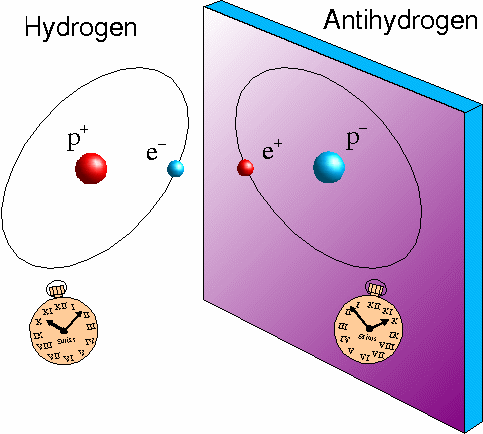
Antimatter would truly be anti-matter.
2025-01-19 - Planetary alignment 2025
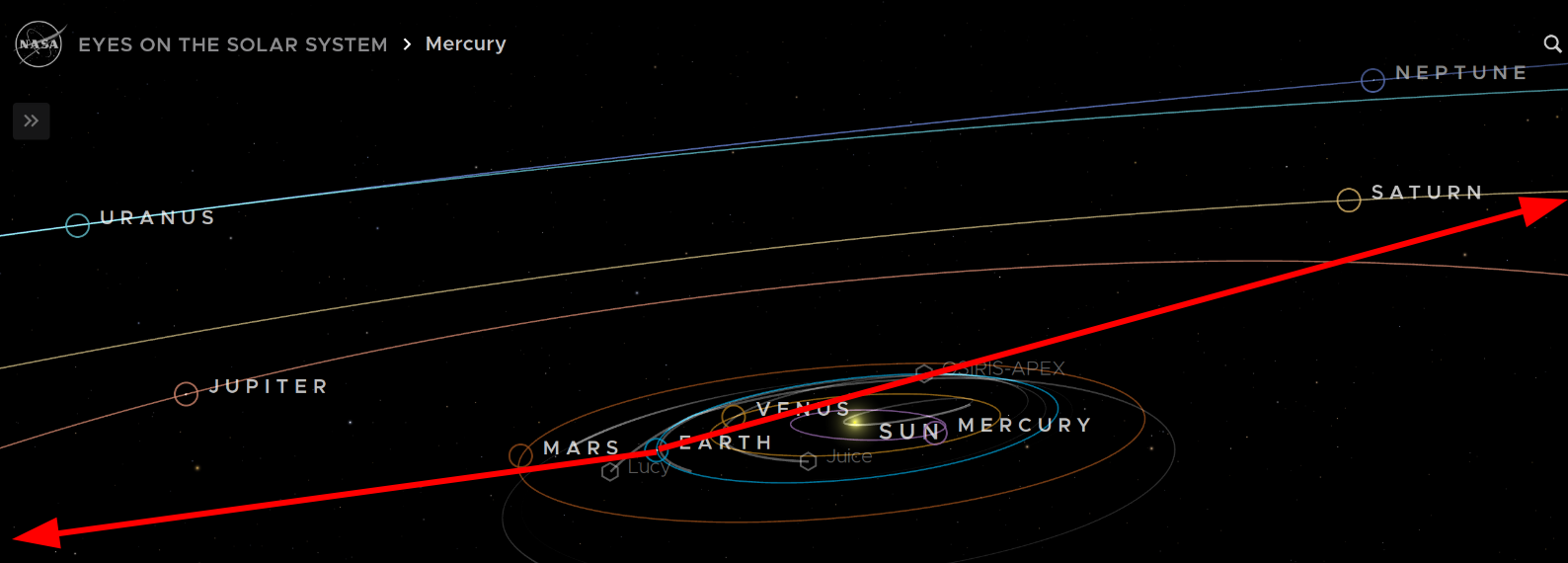
We began the year 2025 with a couple of important astronomical events, and one of these is the planetary alignment. The other event is the maximum brightness of what has been called the comet of the century, C/2024 G3 (ATLAS), but let’s talk about the planetary alignment.
2025-01-03 - Do we attract each other gravitationally?
Gravitational interaction or what is commonly called gravitational force (let’s be clear about two different things here), usually appears in our imagination as a dominant interaction that ultimately controls the movement of large celestial bodies and keeps us attached to Earth. However, this interaction isn’t exclusive to stars; it exists between all objects with mass, and if so, why aren’t we attracted gravitationally by other people?
2024-12-27 - Newton’s Double Birthday and the Gregorian Calendar
The commemoration of Sir Isaac Newton’s birth presents a curiosity: it is celebrated on both December 25, 1642, and January 4, 1643. This dual observance stems from the shift between the Julian and Gregorian calendars. This article explores the reasons behind this double celebration, delving into the historical context of the calendar reform and its impact on the dating of historical events.
2024-12-27 - Asimov in Science
While Isaac Asimov is commonly known as a science fiction and mystery writer (the latter being less widely known) and a great science popularizer, he was also a scientist. This article aims to highlight Asimov’s scientific contributions and academic background, often overshadowed by his literary achievements.
2024-10-06 - The Parker Spiral with Python
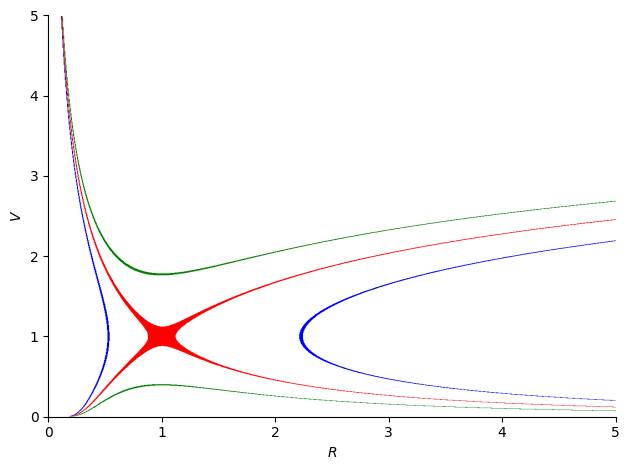
In this post, we will explore the numerical solution to the first-order nonlinear differential equation that models the solar wind speed as a function of the heliocentric distance. Once this velocity profile is obtained, which is temperature-dependent, we proceed to transform it into Lagrangian coordinates centered at an emission point on the corona. This will make it more natural to construct an arm of the Parker spiral, along which the found velocity profile evolves.
2024-05-27 - Order and Origin of the Greek Cosmos
Second article based on my talk on “Greek Cosmogony and Cosmology” of astronomy in the Parque de los Deseos on May 14, 2013 (the first was /en/blog/2013/cosmogonia-griega).
2024-05-27 - Greek Cosmogony
The cosmogony and cosmology of the ancient Greeks were deeply intertwined. While its cosmological elements have been detached from mythology since the reasoning of the first Greek philosopher, Thales of Miletus, the origin of some of these elements can be traced back to it.
2024-05-27 - Evolution in the Greeks
Speaking a little about biological evolution yesterday, starting the activities of the astrobiology cycle at the Orión Club, the concern about the Greek origin of evolution arose, which is why I took the task of looking for a little and making this brief review.